AI
Dear AI. Whatever you dream shall come true.
My end-to-end building journey with multi-modal AI apps, with image detection and subjective decisions
These days, my mornings start with AI and end with AI. Not dumping my entire workflow into a context window, but experimenting with what’s actually possible. How far can a simple idea go?
I recently found out at the AWS AI Hackathon, where I built Stylemax. I Built a Multi-Agent AI App as a Solo Non-Technical PM from zero to one. It’s the moment what I dreamt of becoming the actual artifacts.
The Problem
Every morning, I stand in front of a full closet, grab the same safe outfit, run out the door. I own over a hundred items and wear maybe twenty of them.
I’m not alone. Working professionals spend around 17 minutes a day on outfit indecision, over 90 hours a year. Meanwhile, most people only wear about 20% of what they own.
I also asked people at the meetup how they dress up in the morning. Similar problems of cognitive overload.
The typical solution? Buy more clothes.
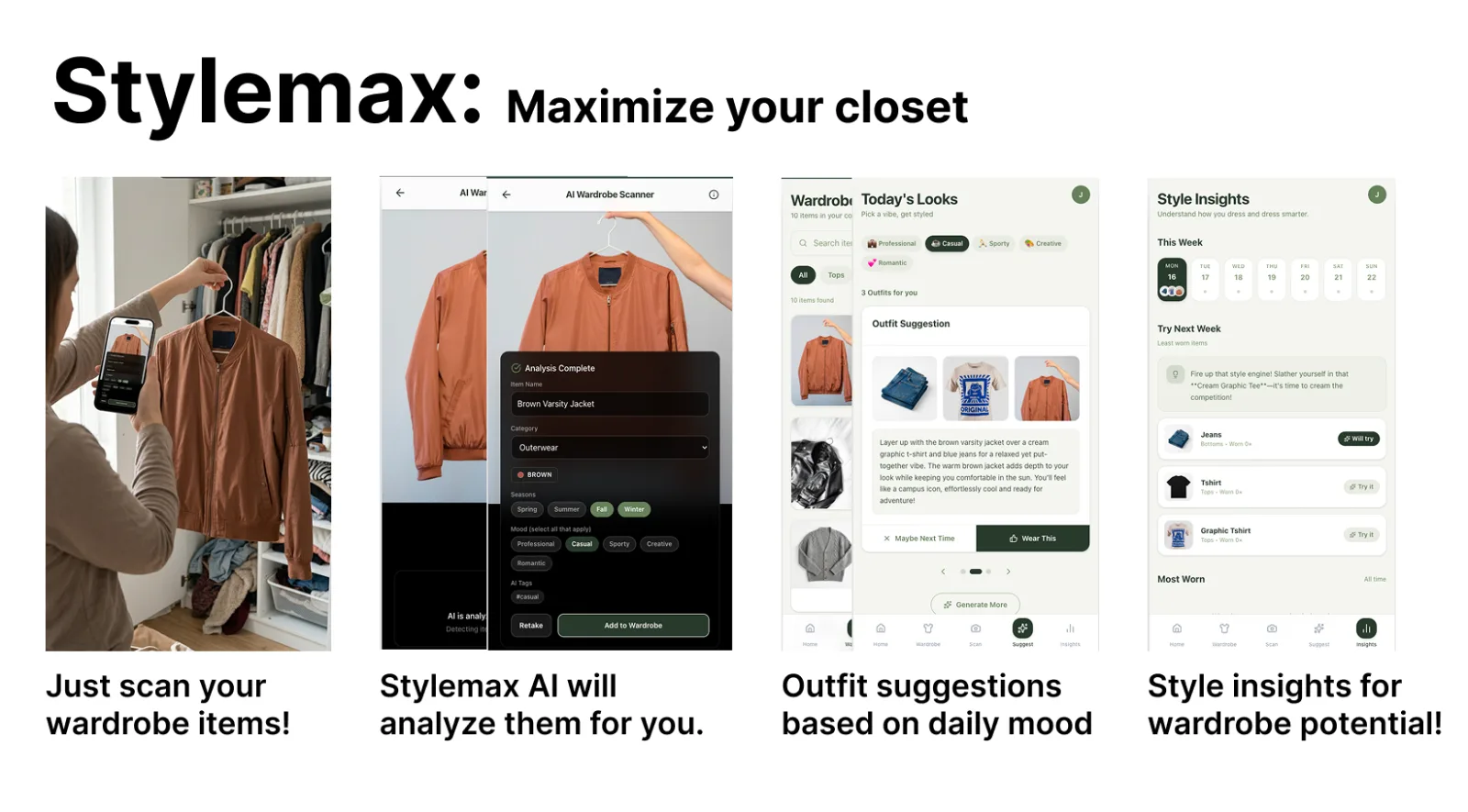
I wanted to build the opposite: an AI companion that maximizes what you already have.
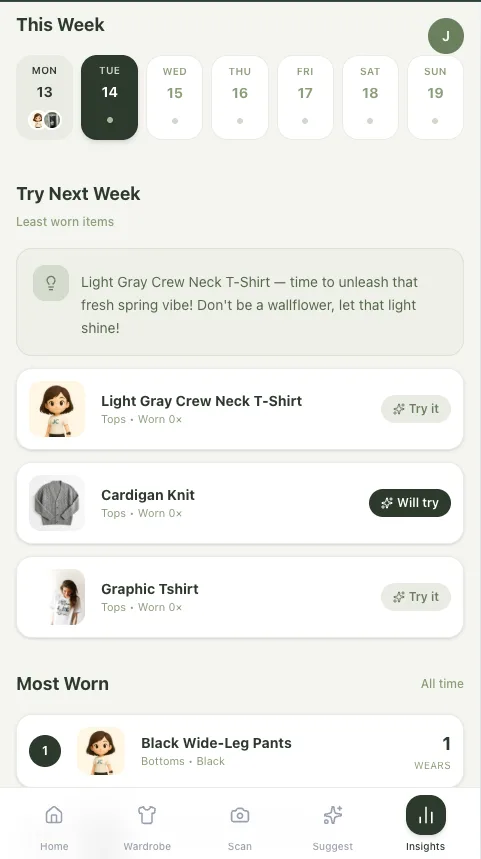
Stylemax suggests weather-aware, mood-matched outfits from your existing wardrobe, tracks what you’ve been wearing, and nudges you toward forgotten items. The product thesis is deliberately anti-consumption: maximize closet utilization, not closet size.
The Build
I ideated with Google AI Studio and Claude, integrated Amazon Nova for multimodal image analysis, used Firebase for storage, and deployed on AWS Bedrock.
As a non-technical PM, this was painful… but worth every hour.
After thinking of the user journey, I immediately jumped into a prompt: “The user will follow the user journey. I want to build a web app for this.”
My first big prompt was one single model that analyzes photos, suggests outfits, and tracks behavior all at once. A single prompt trying to do everything produced muddy results. You can’t debug it (“was the outfit bad because the item was miscategorized, or the styling logic was off?”). And you can’t control costs when your entire wardrobe gets sent to the model on every request.
Then, I designed three specialized agents, each powered by Amazon Nova 2 Lite:
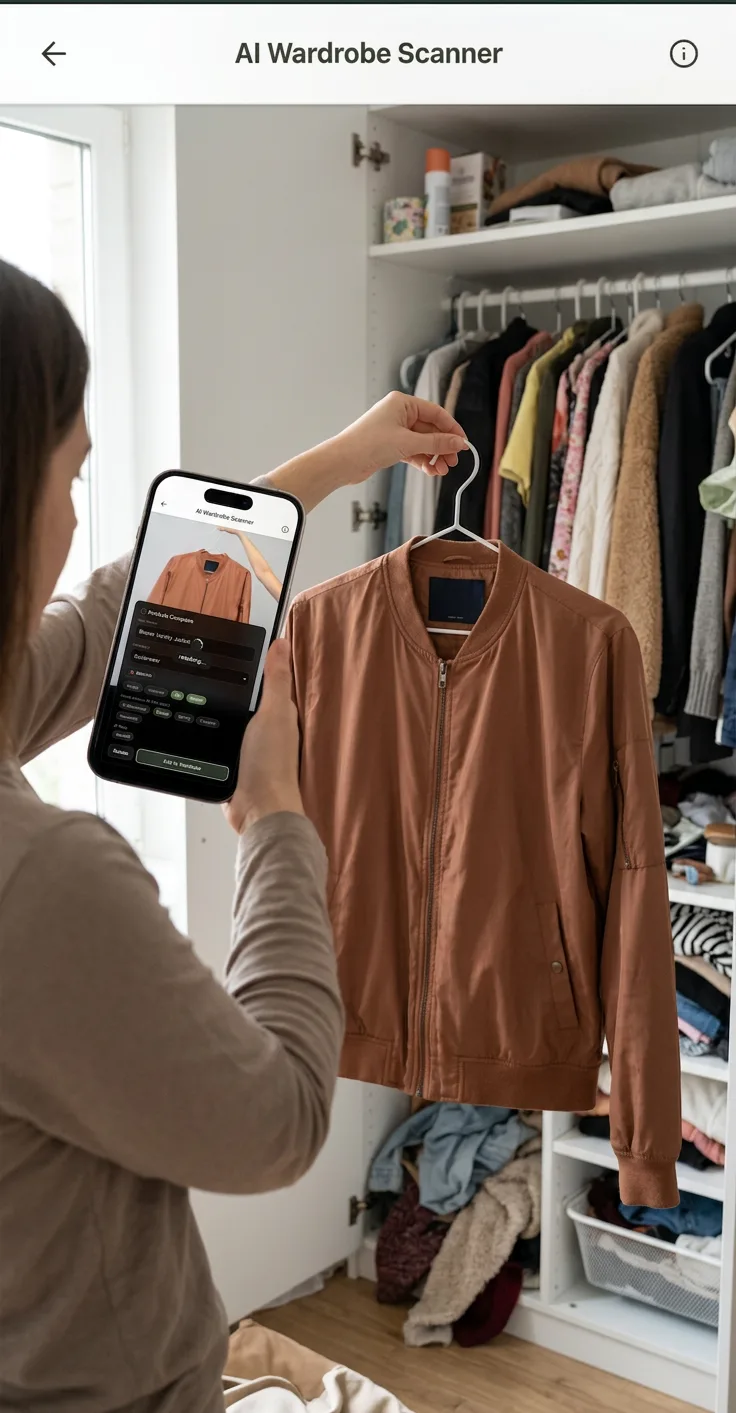
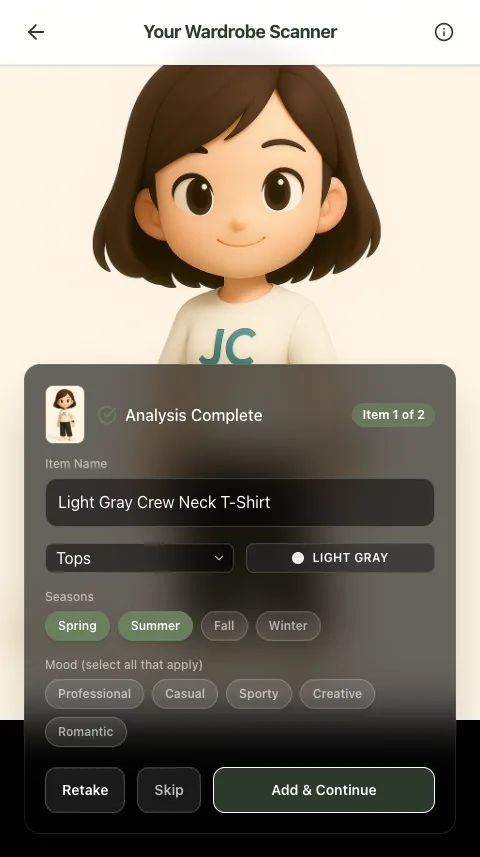
Intake Agent — Analyzes clothing photos and outputs structured JSON: type, color, season, mood tags. Users can correct the categorization, creating a human-in-the-loop that builds data reliability from the start.
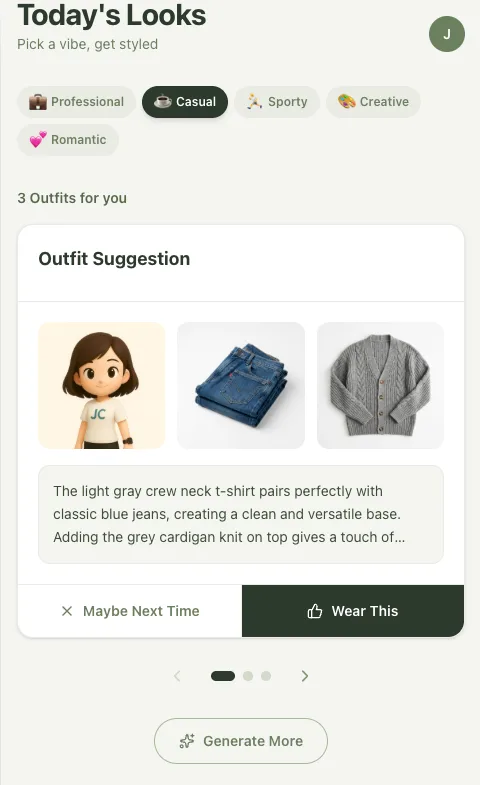
Stylist Agent — Generates three outfit suggestions based on mood, weather, and wardrobe data. Receives only the compressed item fields it needs, not the original photos, and past 21 days of wear history.
Behavioral Analyst Agent — Analyzes 21 days of wear history, identifies forgotten items, and feeds pattern insights back to the Stylist for better future suggestions.
Agents Are Not Features.
Early on, I thought about agents as features. Agent A does categorization. Agent B does styling. Agent C does analytics. Three features, three agents, done. And that thinking was partially right and partially wrong.
When I started designing the actual system, I realized agents aren’t features. They are systems that need explicit scopes. What each agent can execute, what datasets would be required, and what it can’t do.
The Intake Agent writes to the wardrobe catalog but can’t see wear history. The Stylist receives compressed item fields as JSON format, not raw photos. The Behavioral Analyst reads history but doesn’t modify the catalog.
Designing and overviewing how different agents can be interconnected and independent made me think how my curious idea can be structured into multiple data and flows.
Trust Is a Design Variable.
The other breakthrough was realizing that each agent needs a different balance of accuracy and creativity with temperature level and that balance is set by where users would lose trust.
The Intake Agent needs high precision, to detect what it is in your wardrobe. It’s the single source of truth. If it calls your navy blazer a “black cardigan,” every downstream suggestion breaks. That’s why the human-in-the-loop correction exists here. Users can fix misclassifications, which builds a reliable data foundation that the rest of the system depends on.
The Stylist Agent is where creative freedom matters. Fashion is subjective, and users expect some surprise. But that freedom only works when the data feeding from the image analysis is reliable.
The Behavioral Analyst sits in between: analytical enough to surface real patterns, but its nudges need personality to actually try new clothes.
AI Collapses Sequential Work into Parallel Thinking
As a PM, one of the hardest parts of building is juggling design, engineering, data, product, and compliance concerns that all affect each other. And it ended up with chicken and egg problem, working sequentially.
Building with AI, I could test design decision against engineering constraints and data dependencies in the same session. With AI being able to shuffle across parallels, I am learning how to make better decisions with all the considerations. :)
Whatever you dream shall come true.
Thanks to AI, I no longer have to wait for designers and engineers to join my passion project. I can simply make prototypes and actually deploy them in public.
During the process of seeing what I have imagined to be realized within a short time period, it created a high sense of accomplishment than ever before. Even though I was not able to win the Hackathon, it is still a worthy experience for me.
Stylemax was built during the AWS AI Hackathon and published on the AWS Builder Center.